First, I had to understand that Napa Valley, in Northern California, is flanked by two mountain ranges: the Mayacamas Mountains to the west and the Vaca Range to the east. In the center, its rows of vineyards are laid out in straight lines, and that golden light lingers a few seconds longer than necessary before sunset. But even in a region famous for cultivating unforgettable luxury experiences, Bella Union's new artist residency (part of the Far Niente group) proposes something different: a conversation between wines, landscapes, contemporary art, and memory.
A flight from Mexico City to San Francisco, an hour and a half drive, and the vineyards and rose bushes welcome us. It's springtime, and the property opens its doors wide. A building that isn't intimidating. The architecture respects the views and prioritizes the pleasant climate. A centuries-old tree stands at the heart of the courtyard, serving as both a meeting point and a starting point.
The renovation by architects Jason Kerwin and Mike Niemann offers something beyond the usual expectations of a winery visitor. I expected to tour vineyards, learn about grape varieties, and taste some of the labels that have made California a global winemaking powerhouse. What I didn't expect was to find an artistic work anchored in the essence of Bella Union, without feeling forced.
"Art isn't just things: paintings hanging on walls or sculptures on pedestals. Art is a world. Emerging movements. Spotlights shifting direction. Fascinating stories and confronting perspectives. It's vibrant, dynamic, full of opinions, and alive. Much of it — most of it, in fact — happens behind closed doors. At The Cultivist, we open those doors," Joey Lico, curator of this "beautiful union," explains to me. We open the first of many bottles, and the conversation settles into the context of the current world, the challenges of art and the market; but a spirit of passion for what we do prevails.
Napa: Cultivating art and wine
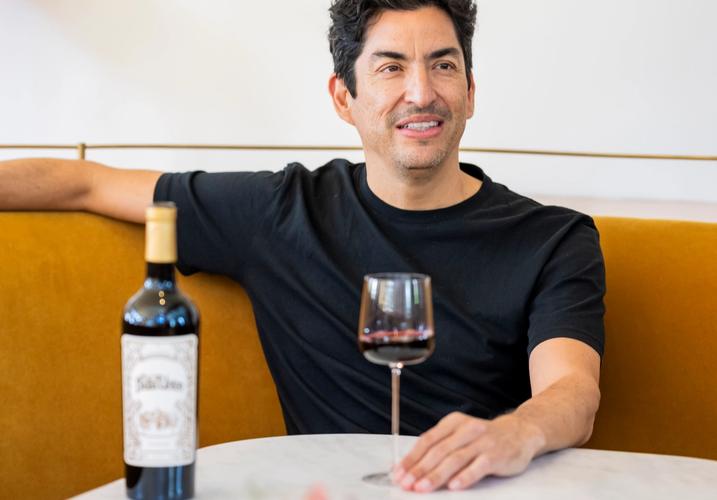
The presence of Eduardo Sarabia (1976, Los Angeles) is felt even before identifying any specific piece. Tall, charming, and with the expression of someone always deep in thought. The Mexican-American artist, whose work has explored the geographical, cultural, and symbolic borders between the two countries for decades, was selected for the second artist residency that transcends the traditional logic of commissions.
The pieces engage with the land, with the history of both regions, and with a much broader conversation about belonging and territory. These are recurring themes in Sarabia's work, but they acquire a particular resonance in the heart of Napa Valley, a prosperous region built by generations of farmworkers, those who rarely occupy the center of the narrative.
For the first time, it was clear to me: wine is agriculture, and that's how it should be understood. This weekend, I also grasped the constant tension that defines Sarabia's production: the coexistence of art and manual labor, of landscape and social reality, of visible and invisible boundaries. The experience moved further and further away from a simple winery visit, becoming a reflection on the role art can play in spaces traditionally associated with luxury.
"I've wanted to be an artist since I was a child," he confessed to me. What has changed is his definition of what that means. Between travel, his work in the studio, and international art fairs, his interests now extend beyond production and exhibitions. Sarabia told me about the social projects he leads in Jalisco, about creating community, about spreading emotions, and about building platforms where other people can imagine new possibilities.
Part of that intellectual ambition finds an echo in the collaboration with Joey Lico and The Cultivist, the organization that has redefined the relationship between collectors, cultural institutions, and artistic experiences around the world. This alliance adds another layer of meaning to the project: Bella Union not only seeks to exhibit contemporary art, but also to integrate it into a global conversation about culture, community, and heritage.
The visitor discovers the pieces almost like someone exploring a vineyard: walking, observing, making personal connections. Art appears between the columns, blends with the architecture, and alters the way we perceive our surroundings.
Eduardo Sarabia, dream enchanter
I asked Sarabia where he felt he was in his artistic career. After decades of work and established recognition, I expected an answer related to achievements or retrospectives. Instead, he spoke of transition. Of movement. Of possibilities yet to be defined, of "luck." The word "infect" came up several times during our conversation: to infect enthusiasm, imagination, to infect dreams.
That afternoon we walked through downtown Napa, past the historic Uptown Theater, while he hummed Chris Isaak's "Wicked Game," and we went into one of the town's general stores that sells everything from wine to toothpaste. He bought a lottery ticket, and my surprised expression prompted him to reply, "If I win, I'll probably donate it all to my kids' basketball team in Vallarta."
I told him I perceived in his work a sense of exuberance, a kind of blossoming, of splendor. As if many of the seeds planted over the years were now entering a new stage. "I don't know if it's something recent. I grew up with the image of Cuban gold chains: the two-and-a-half-peso coins that I now mint with my birthdate; the ceiba tree, the sacred tree, the frogs, the quetzal and its shimmering feathers that were part of Moctezuma's headdress," he said, "it's all always been there."
"People don't dream as much these days," he says, leaving me to think. "They prefer to ask AI." Sarabia picks up the conversation about the capacity to dream. He recalls how his parents emigrated from Mexico to the United States, driven by the idea of a better future for him and his siblings. He tells me about a generation that grew up with the idea that they could imagine any possible destiny. "Being an astronaut. Being an artist. Changing the world."
Back in the vineyards, having lost count of the glasses and the varietals, I asked Sarabia about his work ethic — a combination of discipline, curiosity and energy that seems to always accompany him — and he answered me with a word that today sounds almost countercultural: Generosity.
He spoke of being present. Of dedicating time to people. Of sharing knowledge. Of art in broad, understandable terms. Of his passion for baseball, basketball, and teamwork. Of offering more than is expected. He recounted how he's often been told he doesn't have to do it, that he doesn't need to be so involved. But he insists because he considers it a way of being in the world. He is as fun and approachable as his work. It doesn't matter if it's in the main hall of the Tamayo Museum or as an urban touch in his native Jalisco.
"That's something artificial intelligence won't be able to do," he says. "And it's something we humans need to be very clear about."