A dessert wine is any wine sweet enough to hold its own at the end of a meal — usually the point in dinner when a dry wine would taste thin and sour against something rich. That's the whole idea in one sentence. But "dessert wine" is a wide tent, and the wines inside it get their sweetness in completely different ways: some from grapes left on the vine to shrivel, some from a beneficial fungus, some from added spirit, some from freezing. Knowing which is which changes how you buy it, how you serve it, and what you put next to it on the plate.
Here's the short version, then the longer one.
What makes a wine a dessert wine?
A dessert wine has meaningful residual sugar — the natural grape sugar left unfermented after the yeast stops. Dry table wines finish with almost none (a few grams per liter). Dessert wines can carry anywhere from around 50 grams per liter to well over 200. That sugar is what lets the wine stand up to a tart, a cheese course, or a square of dark chocolate instead of collapsing under it. The best dessert wines aren't just sweet, though — they carry enough acidity to stay bright, so the finish reads as vivid rather than cloying.
The main types of dessert wine
There are four families worth knowing, and they taste nothing alike:
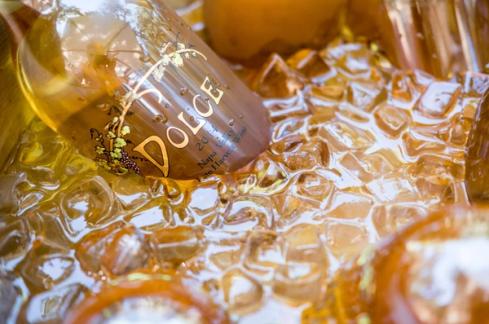
- Late-harvest wines - Grapes left on the vine past normal picking, so they over-ripen and concentrate their sugars. The result is honeyed and lush without any added spirit. This is the family Dolce belongs to.
- Botrytis (noble rot) wines - A specific, prized subset of late-harvest wine. A fungus called *Botrytis cinerea* pierces the grape skins and draws out water, concentrating everything left behind and adding flavors — apricot, honey, saffron, marmalade — that no ordinary grape produces. Sauternes from Bordeaux is the classic; Dolce is the Napa expression. More on this in our Guide to Sauternes-style wines.
- Fortified wines - Port, Madeira, some Sherry. Sweetness comes from stopping fermentation with a neutral spirit, which leaves sugar behind and raises the alcohol. These are bigger, warmer, and longer-lived.
- Ice wine - Grapes frozen on the vine and pressed while still frozen, so the water stays behind as ice and only the concentrated sweet juice runs off. Bright, laser-focused, and rare.
How to serve dessert wine
Serve dessert wine cold — colder than you'd think. Most late-harvest and botrytis wines show best around 43–50°F, cooler than a red and closer to a crisp white. Cold tightens the sweetness and lets the acidity lead. Pour small: these are wines to sip, not swig, so two to three ounces is a generous glass. And because the flavors are concentrated, a little goes a long way at the table — one bottle stretches across a dinner party's worth of small pours.
The classic pairing logic runs two ways. Match sweet with sweet but keep the wine at least as sweet as the dessert, or the wine tastes flat. Or go the other direction entirely and set the wine against something salty and savory — blue cheese, foie gras, a hard aged cheese. That salt-and-sweet contrast is one of the great moves in all of food and wine.
When to reach for a bottle
A dessert wine is the pour for the end of a dinner that mattered — the course after the plates are cleared, when nobody's in a hurry to leave. It's also, quietly, one of the best gifts you can bring, precisely because most people never buy it for themselves. Dolce finishes a meal the way a great last chord finishes a song.