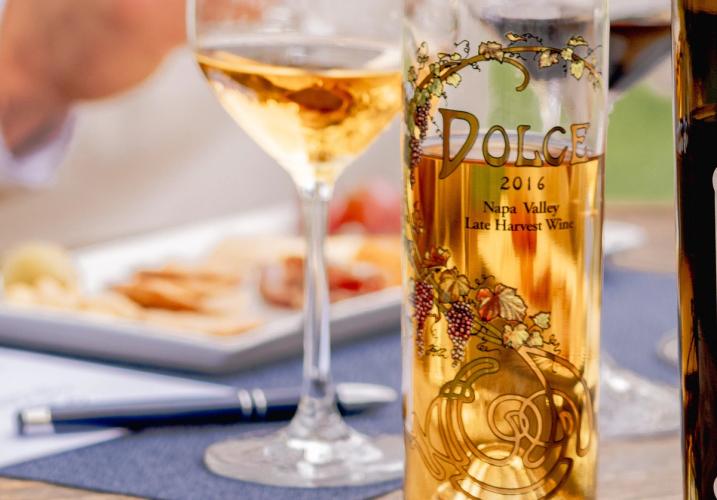
A Sauternes-style late-harvest wine is a sweet white made from grapes that have been deliberately left to rot — with the right rot, in the right conditions — until they turn into shriveled, sugar-dense nuggets that most people would throw away. The rot is a fungus called *Botrytis cinerea*, and when it behaves, it's called noble rot. It's the reason a bottle like this can taste like apricot, honey, orange marmalade, and saffron all at once, with an acidity that keeps the whole thing from ever going flabby. It's also the reason the wine is rare and never cheap: nature has to cooperate, and it often doesn't.
We make one in Napa Valley, so let us walk you through why it's worth the trouble.
What is noble rot, and why is it "noble"?
Noble rot is *Botrytis cinerea* doing something useful instead of destructive. The same fungus that ruins a grape crop in wet, warm conditions becomes a gift under a specific pattern: humid, misty mornings followed by dry, sunny afternoons. That rhythm lets the fungus puncture the grape skin and slowly draw out water without letting the grape fully spoil. What's left is a grape that's lost much of its water but kept its sugar, acid, and flavor — all now dramatically concentrated. The fungus also creates new aromatic compounds that give botrytis wines their signature honeyed, dried-apricot character.
The grapes look, frankly, terrible at this stage — gray, dusty, collapsed. That's exactly what you want.
How Sauternes-style wine is made
The classic grapes are Sémillon and Sauvignon Blanc, and Dolce is built on that same pairing. Because the rot doesn't spread evenly, pickers go through the vineyard multiple times, taking only the individually botrytis-affected clusters — sometimes berry by berry. The yields are tiny. It can take an entire vine to produce a single glass of finished wine, which is a large part of why these bottles are priced and sized the way they are, often as half-bottles.
The other reason this style is rare: it only works in the right place. The original Sauternes region in Bordeaux sits where two rivers meet and generate the morning fog that noble rot needs. Very few places on earth reliably deliver that fog-then-sun pattern, which is why devoted single-wine botrytis producers are so uncommon.
What Sauternes-style wine tastes like
Expect honey, apricot, candied citrus peel, and a note people often describe as saffron or beeswax, all carried by a surprising streak of acidity. That acidity is the secret. Without it, the wine would be a sugar bomb; with it, the sweetness reads as luminous and the finish goes on and on. A young bottle is bright and fruit-forward. With age — and these wines age remarkably — it deepens toward caramel, dried fruit, and toffee.
How Dolce fits in
Dolce is North America's dedicated expression of this tradition — [VERIFY: confirm exact positioning language, e.g. "the only winery in North America devoted exclusively to a single late-harvest wine in the Sauternes style"]. Serve it cold, around 43–50°F, in small pours. Set it against a blue cheese or a plate of stone fruit, or let it be the last thing on the table after everyone's already full. Reach for Dolce when the dinner is one you'll want to remember.