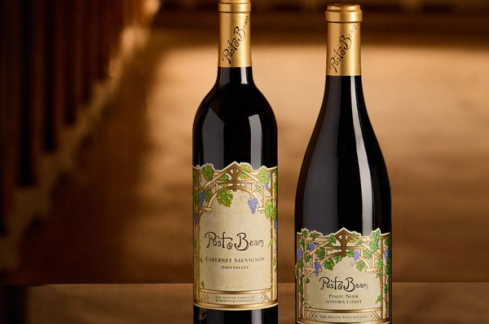
Napa Valley wine, at its simplest, means wine from a small, celebrated growing region in Northern California best known for world-class Cabernet Sauvignon and Chardonnay. The valley is only about thirty miles long and a few miles wide, yet it holds an extraordinary range of soils and microclimates, which is why a Cabernet from one end can taste quite different from a Cabernet at the other.
If you are new to Napa, the good news is that a little orientation goes a long way: understand the main grapes, grasp how the region's sub-areas work, and you can navigate any wine list or tasting room with confidence. Here, from an estate that has been part of the valley since 1885, is the beginner's map.
Where and what is Napa Valley?
Napa Valley is a wine region in Napa County, California, roughly an hour north of San Francisco. It became the first officially recognized American Viticultural Area (AVA) in California in 1981 — the second in the entire United States — a designation that legally defines it as a distinct grape-growing region. Despite its fame, it is small: about 45,000 acres are planted to vines, producing only around four percent of California's wine. What it lacks in size it makes up for in reputation, built on decades of quality and the 1976 Judgment of Paris, when Napa wines beat Bordeaux in a blind tasting.
The grapes to know
You can understand most of Napa with a handful of grapes:
- **Cabernet Sauvignon** — the signature red, just over half of all plantings. Full-bodied, structured, ageworthy.- **Chardonnay** — the leading white. Ripe, rounded, and balanced when grown in the cooler south.- **Merlot** — softer red, alone or blended with Cabernet.- **Sauvignon Blanc** — crisp, aromatic white.- **Zinfandel and Pinot Noir** — a bold spicy red and a light silky one, respectively.
Start with Cabernet and Chardonnay. They are what the valley does best and the clearest window into its style.
How Napa's AVAs work
Here is the part that intimidates beginners needlessly. Within the greater Napa Valley AVA there are sixteen smaller, nested sub-AVAs — official sub-regions, each with its own soils and climate. Names like Oakville, Rutherford, Stags Leap District, Howell Mountain, and Carneros refer to these. Valley-floor AVAs such as Oakville and Rutherford are prized for plush, layered Cabernet; mountain AVAs such as Howell Mountain give firmer, more structured wines; and the cool southern Carneros favors Chardonnay, Pinot Noir, and sparkling wine. You do not need to memorize all sixteen. Simply know that a sub-AVA on a label tells you something more specific about where the wine was grown — and that our own home is Oakville, the warm heart of Cabernet country.
How to read a Napa wine label
A Napa label usually tells you the producer, the grape (or that it is a blend), the vintage, and the appellation — either "Napa Valley" or a more specific sub-AVA. A more specific appellation generally signals a more particular expression of place. Beyond that, trust the producer's reputation and your own palate more than any single term. Wine language can be intimidating, but the label is mostly just answering: who made it, from what, when, and where.
How to start tasting
Taste with attention rather than anxiety. Try a Cabernet and a Chardonnay side by side to anchor the valley's two poles. Notice weight, fruit, and finish before worrying about vocabulary. If you can, taste in the valley itself — most wineries welcome visitors by reservation, and there is no better classroom than a glass in the place it was grown. Our estate has stood in Oakville since 1885, and we would be glad to pour for you; Visit here. To begin at home, start with Our Wine Selection here.