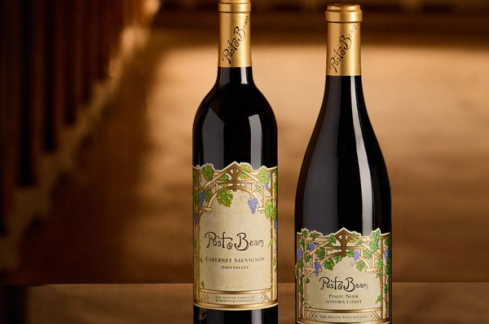
Napa Valley is known above all for Cabernet Sauvignon — it makes up just over half of the valley's vineyard plantings and is the wine that built the region's fame — followed by Chardonnay, its most important white. Beyond those two, Napa produces excellent Merlot, Sauvignon Blanc, Zinfandel, and Pinot Noir, along with sparkling wine from its cool southern end and a small tradition of late-harvest dessert wine. It is worth knowing that Napa is a remarkably small region for its reputation: at around 45,000 planted acres, it produces only about four percent of California's wine, yet commands a place among the world's most celebrated wine regions. Here is what it does best.
Cabernet Sauvignon: the signature wine
If Napa Valley is known for one wine, it is Cabernet Sauvignon. Making up just over half of the valley's plantings, it is the grape that beat Bordeaux at the 1976 Judgment of Paris and turned Napa into a global benchmark. Napa Cabernet is full-bodied, structured, and age-worthy, with ripe cassis and blackberry, cedar, and tobacco. It is both the everyday pride of the valley, and the wine collectors chase most fervently. Everything else Napa makes lives, to some degree, in Cabernet's shadow — which is a shame, because the rest is very good.
Chardonnay: the leading white
Chardonnay is Napa's most planted and most important white grape. It comes largely from the cooler southern reaches of the valley, especially Carneros, where bay fog keeps the fruit balanced. Napa Chardonnay tends toward ripe orchard and stone fruit with a rounder body than white Burgundy, and in careful hands it stays fresh and composed rather than heavy. It is arguably underrated precisely because Cabernet dominates the conversation. We cover it fully in [what sets Napa Chardonnay apart](#).
The supporting cast
Napa's reputation rests on Cabernet and Chardonnay, but several other wines are worth seeking out:
- **Sauvignon Blanc.** Napa's second white, crisp and aromatic, sometimes labeled Fumé Blanc in the oak-aged style Robert Mondavi popularized.- **Merlot.** Softer and plusher than Cabernet, both as a blending grape and a fine varietal wine.- **Zinfandel.** A bold, spicy, brambly red carrying an older California tradition.- **Pinot Noir.** Light and silky, grown in the cool south and used for both still and sparkling wine.- **Sparkling wine.** Made in the traditional method chiefly in Carneros, where cool-climate Pinot Noir and Chardonnay shine.
The rarity worth knowing: late-harvest dessert wine
Napa is not known for dessert wine, which is exactly why the valley's finest example surprises people. In the tradition of French Sauternes, a small number of producers make lusciously sweet, botrytis-affected late-harvest wine from Sémillon and Sauvignon Blanc. Within our own family, this is the role of Dolce.
Where to start
If Napa is new to you, start where the valley is strongest: a Cabernet Sauvignon and a Chardonnay, tasted with attention. They will tell you most of what you need to know about the place — its warmth, its balance, its craftsmanship. From there, the supporting wines become a pleasure to explore. Begin with our selection and Shop Our Napa Valley Wines here.